
Maverick Psychiatry
Dr. Patrick Janik, DO
Board-Certified Psychiatrist
Office: (702) 530-7069
9402 W. Lake Mead Blvd, Las Vegas NV, 89134
.
Ketamine
Depression does not always improve with traditional antidepressant medications or psychotherapy alone. For some patients, ketamine-based treatment may offer another option—particularly when multiple standard treatments have not provided adequate relief.
Maverick Psychiatry offers 2 different forms of ketamine-based treatment:
- 1) SPRAVATO® (esketamine) nasal spray
- 2) Intramuscular (IM) ketamine injections
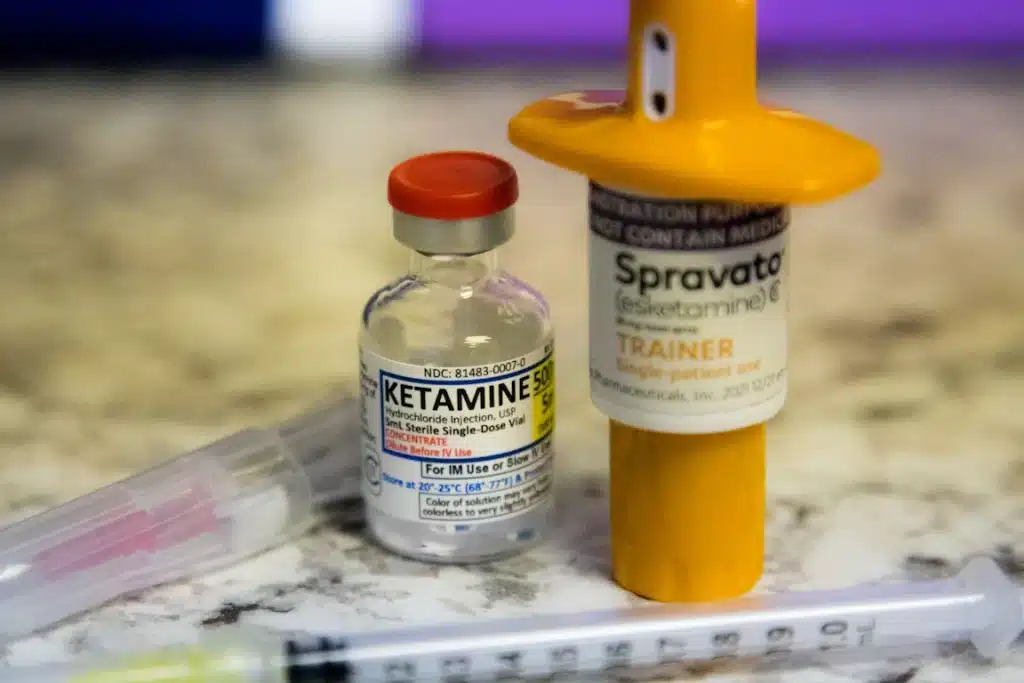
Both treatments are administered in our clinic under medical supervision. They are not take-home medications, and they require careful screening, monitoring, and follow-up.
What is Ketamine?
Ketamine is a medication that has been used safely in medicine for decades, originally as an anesthetic. At lower doses, ketamine and its related medication, esketamine, can have rapid antidepressant effects.
Most traditional antidepressants primarily affect serotonin, norepinephrine, or dopamine. Ketamine works differently. Its effects involve the brain’s glutamate system, including the NMDA and AMPA receptors. Research suggests that this may help promote synaptic plasticity—the brain’s ability to strengthen and reorganize connections involved in mood, learning, and emotional regulation.
The antidepressant dose is substantially lower than the dose ordinarily used for general anesthesia. Patients remain awake and are monitored throughout treatment.
What Does Ketamine Treat?
The strongest evidence is for major depressive disorder, especially treatment-resistant depression.
Treatment-resistant depression generally refers to depression that has not improved adequately after appropriate trials of 2 or more failed treatment attempts with traditional antidepressant medications.
SPRAVATO is FDA-approved for adults with:
- Treatment-resistant depression (MDD)
- Depressive symptoms associated with major depressive disorder with acute suicidal ideation or behavior
For treatment-resistant depression, SPRAVATO may be used either by itself or together with an oral antidepressant. When used for depressive symptoms associated with acute suicidal ideation or behavior, it is administered with an oral antidepressant.
SPRAVATO has not been shown to prevent suicide, and receiving it does not replace hospitalization or other urgent intervention when clinically necessary.
IM ketamine is not FDA-approved specifically for a psychiatric condition. Its psychiatric use is considered “off-label,” which is a common and legally permitted medical practice when supported by clinical evidence and professional judgment. At Maverick Psychiatry, IM ketamine is primarily considered for treatment-resistant depressive illness after an individualized psychiatric evaluation.
Ketamine has also been studied in conditions such as bipolar depression, post-traumatic stress disorder, anxiety disorders, and obsessive-compulsive disorder. However, the evidence for these conditions is less established, and ketamine is not appropriate for every diagnosis or every patient.
How Quickly can Ketamine Work?
One of the most important differences between ketamine and traditional antidepressants is the potential speed of improvement.
Traditional antidepressants ordinarily require daily dosing. Although some changes may appear earlier, meaningful improvement frequently takes several weeks. In the large STAR*D study, patients who benefited from an initial antidepressant took an average of nearly six weeks to reach a response and nearly seven weeks to reach remission. Approximately one-third achieved remission with the first medication, while another 10%–15% experienced meaningful improvement without full remission. The likelihood of remission generally decreased after additional unsuccessful medication trials.
Ketamine can begin reducing depressive symptoms within hours or days for some patients. In an important controlled trial of patients with treatment-resistant depression, 64% of patients receiving IV ketamine met response criteria after 24 hours, compared with 28% receiving an active placebo. This was a study of IV ketamine rather than IM ketamine, but it demonstrates the unusually rapid antidepressant effect seen across ketamine research.
SPRAVATO studies have also demonstrated early improvement, sometimes beginning within the first day. In pooled clinical-trial data, approximately 59% of patients receiving SPRAVATO plus a newly initiated oral antidepressant met response criteria by day 28, compared with approximately 45% receiving a placebo nasal spray plus a newly initiated antidepressant.
These statistics should not be treated as a direct head-to-head comparison. The studies enrolled different patient populations, used different forms of ketamine, and followed different research designs. They also represent averages—not a prediction of how any particular patient will respond.
Some patients notice a substantial early change, some improve gradually over a series of treatments, and others do not respond. An early improvement may also fade without completion of the initial treatment series or an appropriate maintenance plan.
SPRAVATO -vs.- IM Ketamine
SPRAVATO®
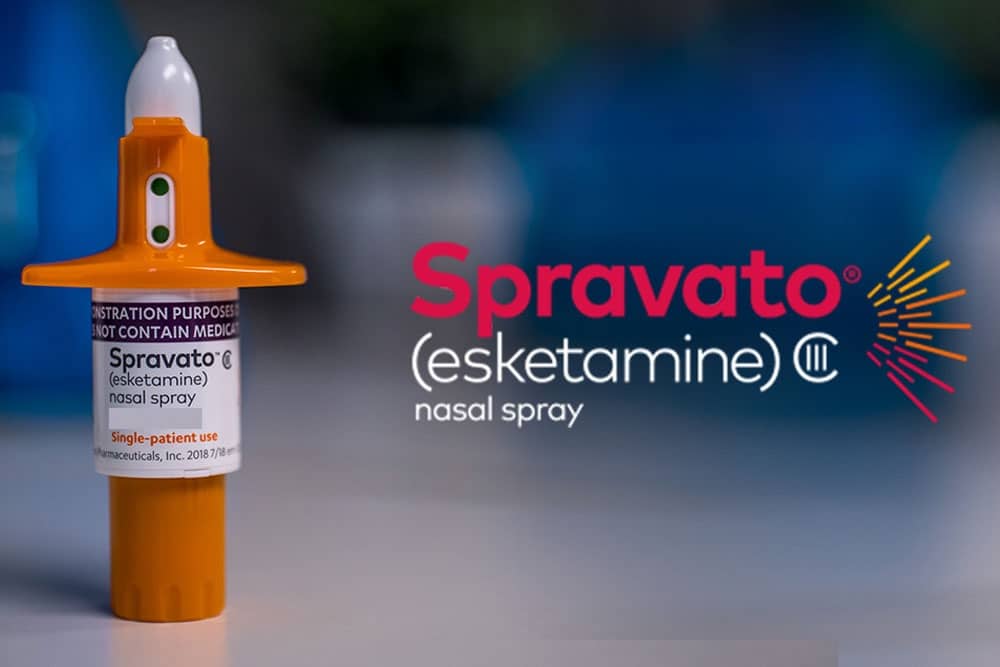
Medication: Esketamine, one component of the ketamine molecule
Administration: Nasal spray self-administered in the clinic under supervision
FDA status: FDA-approved for specific adult depressive conditions
Research base: Multiple large, controlled clinical trials specifically involving treatment-resistant depression
Dose and absorption: Standardized 56 mg or 84 mg nasal dose, depending on the indication and treatment phase
Typical initial schedule: Commonly twice weekly for four weeks, followed by less-frequent treatment when indicated
Insurance: May be covered when the patient and treatment meet the insurer’s criteria
Monitoring: At least two hours in the clinic under the FDA-required REMS program
IM (intramuscular) Ketamine

Medication: Racemic ketamine, containing both molecular forms of ketamine
Administration: Injection into a muscle, administered by clinical staff
FDA status: Off-label for psychiatric treatment
Research base: Promising evidence, but fewer studies specifically examining the IM route; much of the broader ketamine literature involves IV treatment
Dose and absorption: Individually prescribed dose based on clinical factors
Typical initial schedule: At Maverick Psychiatry, the initial series is generally eight treatments over four weeks
Insurance: Not covered by insurance and offered on a self-pay basis
Monitoring: Approximately two hours of in-clinic medical monitoring
Neither treatment can be assumed to be stronger or more effective for every patient.
Although research has attempted to compare racemic ketamine with esketamine, differences in route, dose, study design, and patient selection prevent a simple conclusion that one is universally superior.
Ultimately, the best option depends on medical history, prior treatments, insurance requirements, treatment goals, tolerability, scheduling, and cost.
Is Ketamine right for me?
Ketamine is not intended to replace every traditional treatment, and it is not guaranteed to work. It may be worth considering when depression remains significantly impairing despite appropriate medication, psychotherapy, lifestyle modifications, and other evidence-based treatments.
The first step is a psychiatric consultation. We will review your treatment history, discuss SPRAVATO and IM ketamine, consider other reasonable options, and help determine whether either treatment is appropriate for you.
Schedule a Consultation
Contact Maverick Psychiatry to schedule a ketamine-treatment consultation or learn more about the eligibility process.
(then fill out & submit the black form near the bottom of the page)
This page is provided for general educational purposes and is not a substitute for an individualized medical evaluation. Treatment outcomes vary, and no specific response or remission can be guaranteed.